How many neon tetras in 60 litres?
Transparency: this article contains Amazon affiliate links. If you buy through them, we earn a small commission at no extra cost to you — it never influences our advice. Learn more
It’s one of the best-selling shoaling fish in the world, and with good reason: a group of neons darting between the plants, electric-blue stripes flashing, is still one of the finest sights in fishkeeping. It’s also one of the fish beginners lose most often… in the first few days.
The good news: a 60-litre tank can hold a really lovely shoal. Provided you respect two things that shop labels leave out: the number, and the timing.
The essentials. In a 60-litre tank, allow 10 to 12 neons if they’re on their own, or 8 to 10 with other small inhabitants. Never fewer than 6: it’s a shoaling fish. Only add them to a tank that has been cycled for several weeks, with fairly soft to medium water (pH 6–7.5), 22 to 25 °C, plenty of plants and subdued lighting.
The right number of neon tetras in 60 litres
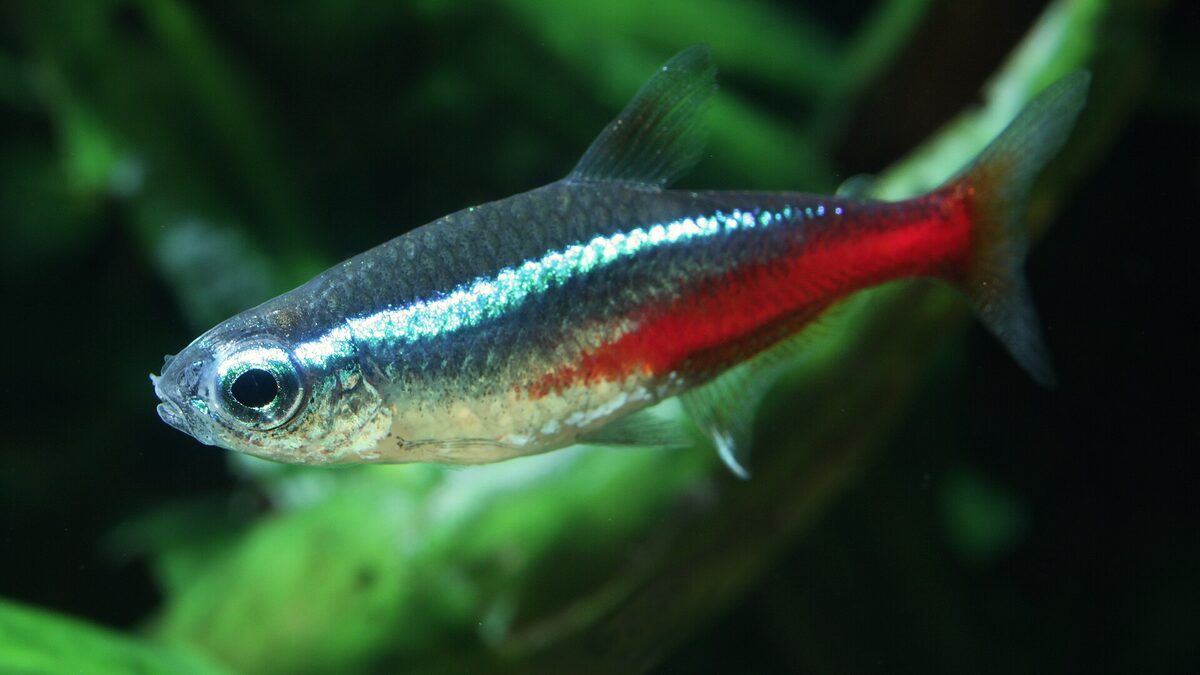
The neon tetra (Paracheirodon innesi) measures 3 to 4 cm and produces little waste. What really matters is the size of the shoal: in a group, it feels safe, swims out in the open and shows its best colours.
| Your plans for 60 L | Suggested neons | Note |
|---|---|---|
| Neon-only tank | 10–12 | The shoal fills the middle of the tank, guaranteed wow factor |
| Neons + shrimp or snails | 8–10 | Adult shrimp get along with them fine |
| Neons + a few male guppies | 8 | Compromise water (pH ≈ 7), see below |
| Fewer than 6 neons | Avoid | Shoal too small: stress, hiding, dull colours |
For another volume, the calculator further down the page gives you a cautious range. Just bear in mind that a shoal of neons is always better bigger rather than smaller.
The real trap: when you add them
The neon isn’t fragile once it’s settled — it can live 5 years or more. But it copes very badly with a new or unstable tank. It’s a classic scene: you set up an aquarium, buy ten neons the following weekend, and half of them are gone within a week.
To avoid it:
- Wait until the tank is cycled — 0 ammonia and 0 nitrite when tested — and, ideally, until it has been running for a few more weeks. Our article on how long it takes to cycle a tank sets out the timeline.
- Acclimatise slowly: float the bag for 15 to 20 minutes to even out the temperature, then gradually add a little tank water to the bag over half an hour before transferring the fish with a net.
- Don’t add the bag water to your aquarium.
A reliable test kit is essential to know when the tank is ready:
Liquid water test kit
Our pick- Measures ammonia, nitrite, nitrate and pH
- Far more accurate than test strips
- Dozens of tests per kit: good value over time
- Slower to use than a strip (a few minutes per test)
- Higher upfront cost
Amazon affiliate link. Price and availability may change at any time.
To compare models, see our guide to the best water test kit.
Buy your shoal in one or two batches, a few days apart, rather than one neon here and there. Fish that arrive together form a tighter shoal, and you're not constantly introducing new individuals (and any germs they carry) into an established group.
The ideal water and décor
Water parameters
Wild neons live in Amazonian waters that are soft, acidic and dimly lit. The neons sold today are almost all captive-bred and far more tolerant, but they’re still most comfortable in water that is:
- at 22–25 °C (kept permanently above 26 °C, their lives are shortened);
- between pH 6 and 7.5;
- fairly soft to moderately hard (GH ideally below 10–12).
If your tap water is very hard, that’s not a deal-breaker for captive-bred neons, but softer water will show them at their best: our article on softening hard tap water explains how to go about it.
Décor
Neons show off their colours in a well-planted tank with a dark substrate and subdued lighting. Floating plants break up the light and recreate the feel of their natural habitat. For submerged plants, take your pick from our selection of easy plants with no CO2.
Floating aquarium plants
Our pick- Diffuse the lighting, so neons feel safer
- Absorb nitrates and keep algae in check
- No substrate or CO2 needed
- Spread fast: thin them out regularly
- Don't cope well with strong surface current
Amazon affiliate link. Price and availability may change at any time.
Which tank mates?
The neon is perfectly peaceful, but its small size makes it easy prey. The rule: no fish big enough to swallow it.
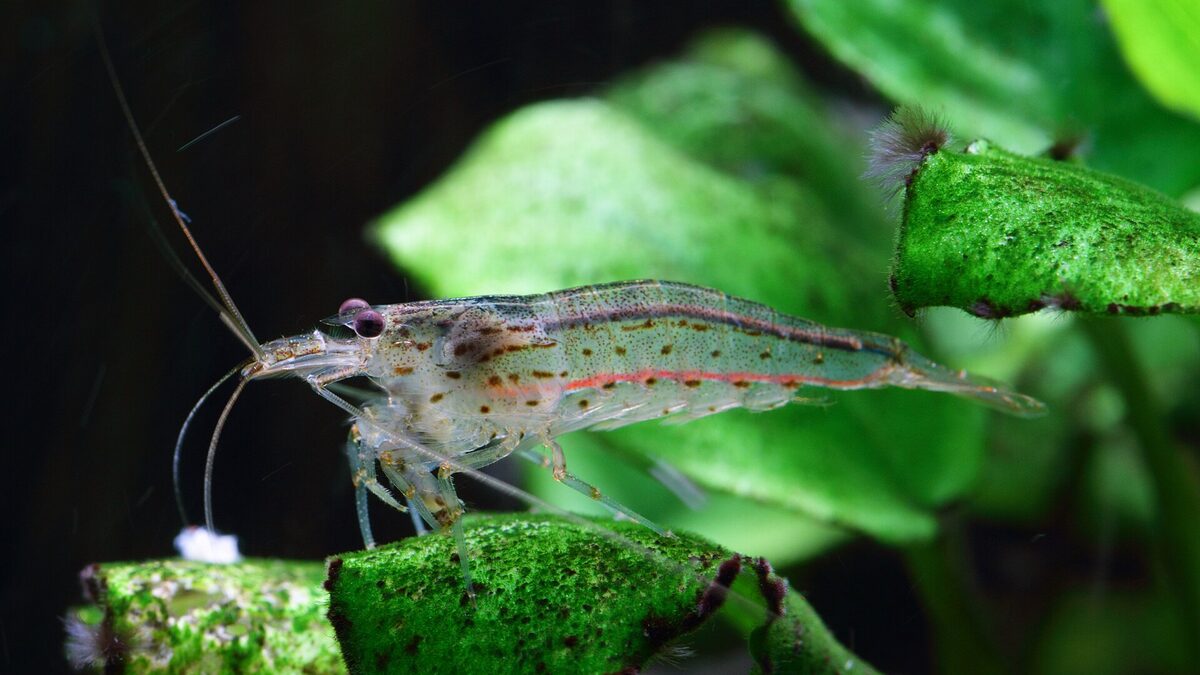
- Good neighbours in 60 L: adult Neocaridina shrimp (the neons may snap up a few baby shrimp), snails, a few male guppies in compromise water. For guppies, our complete guppy care guide covers their needs in detail.
- In a bigger tank (80 L and up): a group of Corydoras on the bottom complements a shoal of neons beautifully — see how many Corydoras in an 80L tank.
- Avoid: angelfish (which eat neons once they’re fully grown), large cichlids and, in general, any fish with a mouth bigger than a neon.
Feeding
The neon has a small mouth and feeds mostly in mid-water. Give it:
- micro pellets or fine flakes as a staple;
- 2 to 3 times a week, small frozen foods (brine shrimp, daphnia, cyclops);
- one or two small feeds a day, as much as it eats in 1 to 2 minutes.
Micro pellets for small fish
Our pick- Grains sized for small mouths
- Sink slowly and get eaten in mid-water
- Easy to portion without overloading the tank
- Still need topping up with frozen food for variety
Amazon affiliate link. Price and availability may change at any time.
Neon or cardinal tetra?
The two are often mixed up in shops. The neon (Paracheirodon innesi) has a red stripe limited to the rear half of the belly. The cardinal (Paracheirodon axelrodi) has a red stripe along the full length of the body. More spectacular, the cardinal needs warmer (24–28 °C) and softer water: for a first shoal, the neon remains the more tolerant choice.
Before you buy your neons
- My tank is cycled (0 ammonia, 0 nitrite) and has been running for several weeks
- The temperature is stable between 22 and 25 °C
- The pH is between 6 and 7.5
- The tank is planted, with shaded areas
- I'm planning at least 8 to 10 neons, bought in one or two batches
- No fish in the tank is big enough to swallow them
A shoal of ten neons in a planted 60-litre tank is one of the most beautiful sights a beginner can treat themselves to, on a modest budget. We take off a point because the neon is less "easy" than people say: it's unforgiving of a tank that's too new or a botched acclimatisation. Once past that hurdle, it's an unobtrusive, peaceful and long-lived fish.
Conclusion
In a 60-litre tank, a shoal of 10 to 12 neons (or 8 to 10 with other small inhabitants) is ideal, and never fewer than 6. Numbers aren’t everything, though: it’s above all the timing of their introduction that decides whether they survive. A cycled, mature tank, slow acclimatisation, fairly soft water, plants and subdued lighting: your neons will repay you for years.
To get off to a good start, brush up on the nitrogen cycle, explained simply. And if you’re planning your future tank, our page on which tank for which fish helps you choose the right volume.
How many fish in my tank?
Enter your tank volume and the species you want — we give a cautious estimate.
Indicative estimate. It also depends on filtration and plants, and assumes a cycled tank. When in doubt, stock less: animal welfare comes first.
Frequently asked questions
How many neon tetras can you keep in a 60-litre tank?
A shoal of 10 to 12 neons is ideal in a 60-litre tank where they're the only fish, or 8 to 10 if you add other small inhabitants. Never go below 6: the neon is a shoaling fish that gets stressed and hides when there are too few of them.
Why do my neon tetras die after a few days?
Most often, the aquarium is too new or unstable: a tank that isn't cycled yet, fluctuating water, or acclimatisation that was rushed after the journey home. Neons cope badly with these swings. Add them to a tank that has been cycled for several weeks, acclimatise them slowly and test the water first if anything goes wrong.
Can you keep neon tetras with guppies?
Yes, it's possible in compromise water: pH around 7, medium hardness, about 24 °C. Neons prefer softer water and guppies harder water, but captive-bred neons adapt well to something in between. Plan for a shoal of at least 8 to 10 neons.
Why are my neon tetras losing their colour?
Neons naturally turn pale at night and when they first wake up: it's a form of camouflage. Dull colours in the middle of the day, on the other hand, point to stress: a shoal that's too small, lighting that's too bright, no hiding places or poor water quality.
What's the difference between a neon tetra and a cardinal tetra?
On the neon (Paracheirodon innesi), the red stripe only covers the rear half of the belly; on the cardinal (Paracheirodon axelrodi), it runs the full length of the body. The cardinal needs warmer (24-28 °C) and softer water: it's a little more delicate than the neon.