Corydoras: how many in an 80L and what substrate?
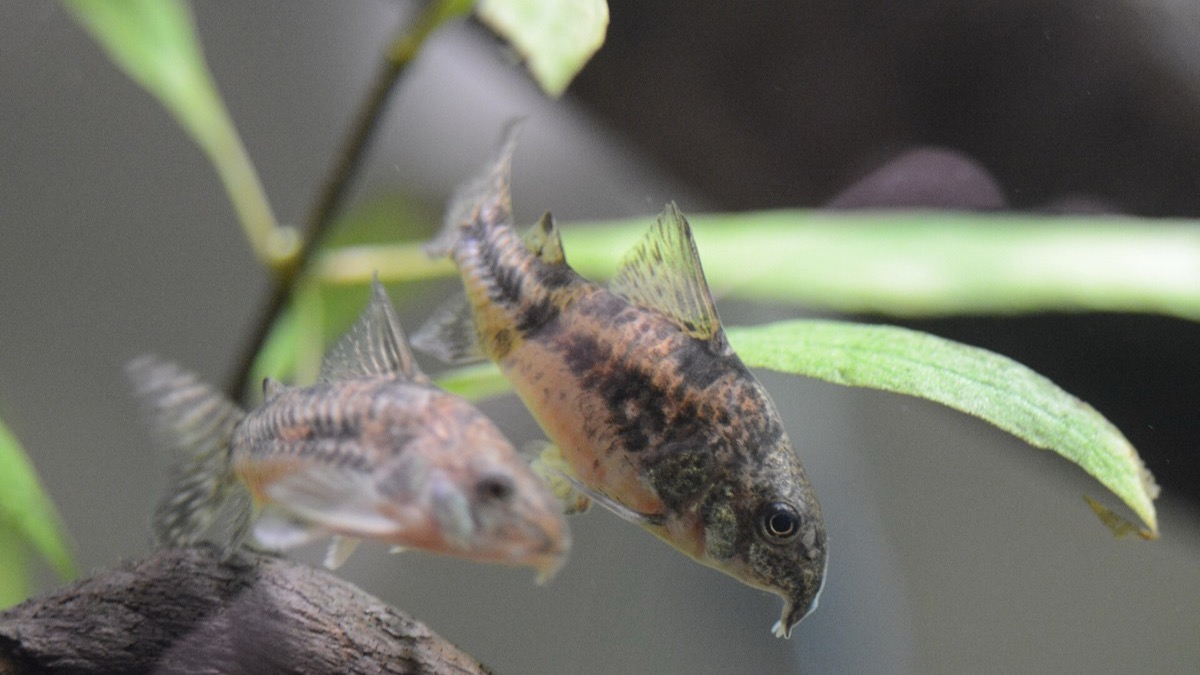
Corydoras, those busy little bottom-dwelling catfish, are among the most endearing fish in the freshwater hobby. But they have two non-negotiable requirements: living in a group, and sifting a substrate that won’t injure them. Here’s how to house them well in an 80-litre tank.
The essentials — our pick. In an 80-litre tank, plan for a group of 6 to 8 Corydoras (common species), or 10–12 for dwarf species. They’re gregarious fish: never on their own. The substrate must be fine sand or smooth, rounded gravel: their barbels are delicate, and a sharp substrate wears them down and infects them. Give them bottom food (sinking pellets).
A shoaling fish: never alone
The most common mistake is buying “a” Corydoras, or two. It’s a gregarious fish: isolated, it stresses, hides and wastes away. It needs a group of at least 6 of the same species to express its natural behaviour — that cheerful collective bustle that gives them all their charm.
In an 80-litre tank:
| Type of Corydoras | Suggested number |
|---|---|
| Common species (bronze, paleatus, aeneus) | 6 to 8 |
| Dwarf species (pygmaeus, habrosus) | 10 to 12 |
A lone Corydoras isn't "peaceful", it's stressed. If you're down to one or two after losses, top the group back up with the same species. You'll see the difference immediately: they become active, come out, and sift the substrate together.
The substrate: the vital point
This is THE criterion specific to Corydoras. They constantly sift the substrate with their barbels — sensitive sensory organs around the mouth. On sharp or pointed gravel, those barbels wear down, shorten and become infected, which eventually dooms the fish.
So they need:
- fine sand or very smooth, rounded gravel;
- never angular, sharp or oversized gravel.
Sand has another advantage: you can watch the Corydoras bury their snouts in it, a natural behaviour impossible on coarse gravel. For the substrate, here’s our pick:
Fine aquarium sand
Our pick- Fine, smooth grains that protect the delicate barbels
- Allows the natural sifting behaviour, snout buried
- Suited to bottom dwellers, with no sharp edges
Amazon affiliate link. Price and availability may change at any time.
On the food side, Corydoras sift the bottom but won’t make do with leftovers: they need food that sinks down to them.
Sinking bottom pellets
Our pick- Sink quickly to the bottom, where Corydoras live
- Provide a real meal, on top of fallen leftovers
- Easy to dish out in the evening, lights off
Amazon affiliate link. Price and availability may change at any time.
The checklist before adopting
Before bringing your Corydoras home, check these points:
- Group of 6 to 8 (common species) of the same species
- Substrate of fine sand or smooth, rounded gravel (never sharp)
- An 80 L tank, cycled, with open areas to sift
- Bottom food (sinking pellets) on top of leftovers
- A few hiding spots (wood, plants) to reassure them
- Well-oxygenated water (they sometimes come up to breathe at the surface)
If you adopt Corydoras, fine sand isn't an option, it's a must. Watching a group of Corys cheerfully sift a sand bed, snouts buried, is one of the finest sights in an aquarium — and the guarantee of healthy barbels.
Conclusion
For happy Corydoras in an 80-litre tank: a group of 6 to 8, never alone, on a fine sand substrate that protects their barbels. Add bottom pellets and a few hiding spots, and you’ll have a lively, lasting bottom shoal. The substrate really is the point not to overlook.
To choose your tank by fish, see our guide to which tank for which fish.
How many fish in my tank?
Enter your tank volume and the species you want — we give a cautious estimate.
Indicative estimate. It also depends on filtration and plants, and assumes a cycled tank. When in doubt, stock less: animal welfare comes first.
Frequently asked questions
How many Corydoras in an 80-litre tank?
Plan on a group of 6 to 8 Corydoras in an 80-litre tank for the common species (bronze, paleatus). They're gregarious fish that need a group to feel settled. For dwarf species (pygmaeus, habrosus), you can go up to 10-12.
What substrate for Corydoras?
Fine sand or very smooth, rounded gravel is essential. Corydoras sift the substrate with their sensitive barbels: sharp or pointed gravel wears them down and causes infections. Fine aquarium sand is ideal.
Can you keep a single Corydoras?
No, that's to be avoided. Corydoras are shoaling fish that stress and waste away on their own. You need a group of at least 5-6 individuals of the same species so they can express their natural behaviour and stay healthy.
Do Corydoras clean the aquarium?
Partly: they sift the substrate and eat leftover food that has fallen to the bottom. But they don't feed on waste: you need to give them sinking food (bottom pellets) as well. They're not full-blown 'cleaners'.