Hard tap water: how to soften it for your tank
My tap water comes out at 30 °dGH, liquid concrete, basically. If, like me, you live in a hard-water area, you may have watched your plants struggle or given up on shrimp. Good news: you can soften aquarium water cleanly. But before you pour anything in, you have to measure.
The short version. Before softening, measure your GH (total hardness) and KH (carbonate hardness). The most reliable method is to cut tap water with RO (reverse osmosis) water. For a beginner, the simplest option is still to pick fish that suit your water rather than constantly altering it, it’s far less risky.
Hard, soft: what are we talking about?
“Hardness” measures the amount of dissolved minerals, mainly calcium and magnesium. There are two figures:
- GH (general hardness): the total amount of minerals. This is what matters for the health of fish and shrimp;
- KH (carbonate hardness): the water’s ability to stabilise pH. Too low a KH = unstable pH; a high KH = pH that stays high.
“Hard” water has a high GH and KH. Plenty of fish cope with it; others (Caridina shrimp, some tetras and killifish) need soft water.
Before trying to soften anything, ask your water supplier for the hardness of your water (often on your bill or the water company's website). You'll know straight away whether you need to step in, or simply pick the right species.
Step 1: measure first
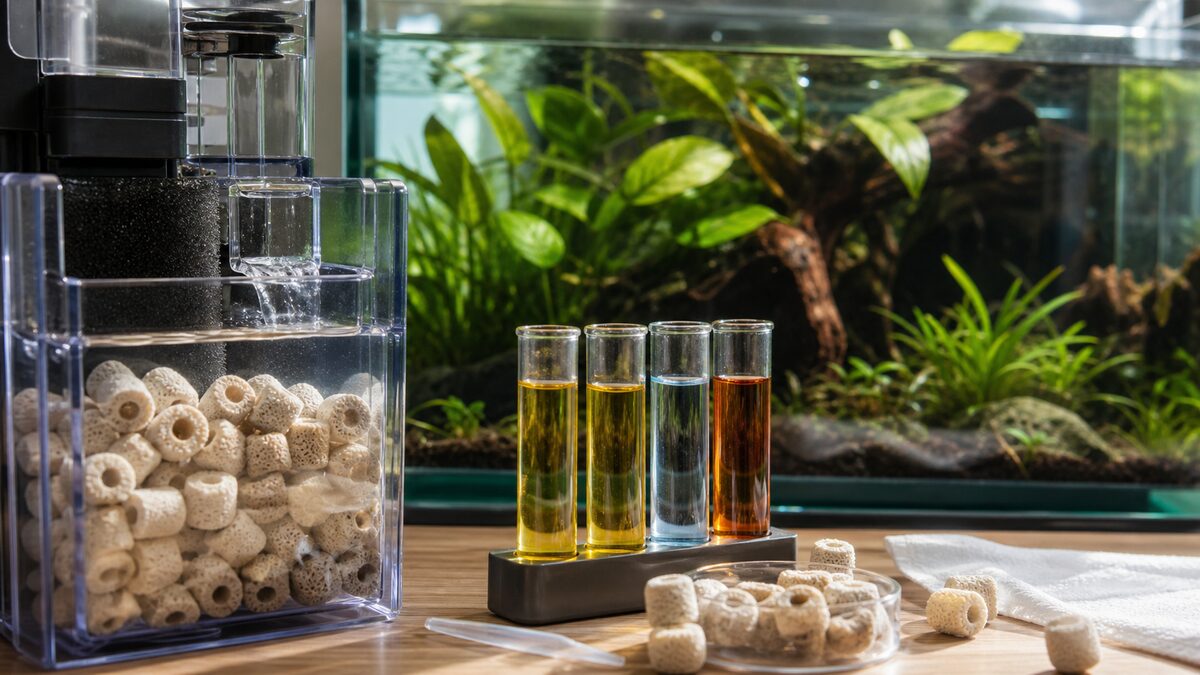
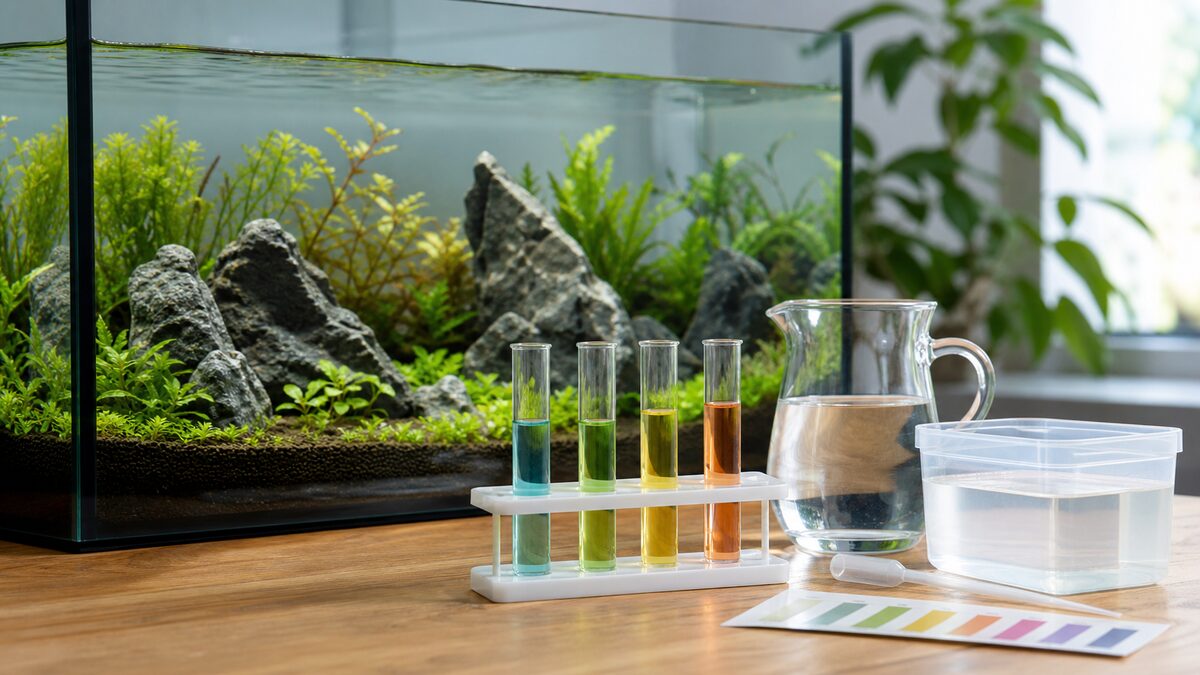
Never soften blind. A liquid GH/KH test gives you your starting figures and lets you track the effect of each method. Strips will do in a pinch but are less accurate; for adjusting hardness, go for the drops. Here’s our pick:
GH/KH liquid test kit
Our pick- Measures GH (fish health) and KH (pH stability)
- Liquid-drop accuracy, essential for adjusting hardness
- Lets you check the mix before adding it to the tank
Amazon affiliate link. Price and availability may change at any time.
Step 2: the 4 ways to soften
1. RO water (the most reliable)
A reverse osmosis unit produces water almost free of minerals, which you cut with tap water to hit the hardness you want. For example: half RO, half tap ≈ halves the GH. It’s the method serious aquarists use.
- ✅ Precise, repeatable, ideal for shrimp.
- ❌ The cost of an RO unit, and you have to remineralise pure RO water before use.
Reverse osmosis (RO) unit for aquariums
Our pick- Water almost free of minerals, to cut for the exact hardness you want
- Precise, repeatable method, ideal in a hard-water area
- Cheaper to run than buying RO water in bottles
Amazon affiliate link. Price and availability may change at any time.
No RO unit? You can buy RO water by the bottle from aquatic shops, or sometimes bottled.
2. Peat / catappa leaves
Filtering the water through peat (or adding catappa leaves) releases substances that gently lower KH and pH, tinting the water slightly (a “blackwater” effect). Gentle and natural, but less precise and gradual.
3. Rainwater (with caution)
Naturally soft, but its quality depends on the environment (pollution, roofing). Reserve it for those who can collect it cleanly, and always cut it with tested water.
4. What NOT to do
- The household water softener: it swaps calcium for sodium. The water stays unsuitable and the sodium is harmful.
- Boiling: it acts a little on KH, not on GH, and it’s impractical.
For a beginner who wants shrimp in a hard-water area, cutting tap water with bottled RO water (without buying an RO unit just yet) is the best balance of simplicity and reliability. You move up to an RO unit only once the hobby has properly stuck.
The simplest solution: match the fish to the water
Permanently altering hardness takes discipline. For a first tank, the wisest move is often to leave your water as it is and pick species that like it. In hard water, guppies, platies and mollies are perfectly happy, and you avoid any chemical fiddling.
- I've measured my starting GH and KH
- I know the ideal hardness for the species I'm aiming for
- I've chosen a method (cut RO water, peat…) OR decided to match the species to my water
- I remineralise RO water before using it (never pure)
- I check the GH after mixing, before adding it to the tank
Conclusion
Softening aquarium water means measuring first, then choosing the right method, with cut RO water being the most reliable. But don’t overlook the most relaxing option: picking fish that already love your water. You’ll save yourself a lot of hassle.
To go further, read « Tap water in your aquarium: what to know », and if you’re just starting out, our beginner’s guide lays out every step in order.
Frequently asked questions
What water hardness is right for a freshwater tank?
Most beginner freshwater fish (guppies, platies) are happy with a GH of 8 to 20 °dGH. Soft, acidic-water species (Caridina shrimp, some tetras) prefer a low GH, 2 to 8 °dGH. You match the water to the species, not the other way round.
Can you soften the water with a household water softener?
No, that's a common mistake. A domestic softener swaps the calcium for sodium: the water stays 'hard' for the fish and the sodium is harmful. For the tank, use RO water or peat instead, never your home softener.
Can pure RO water be used straight away?
No, never pure. RO water is almost stripped of minerals: used on its own it's unstable and dangerous. You cut it with tap water, or remineralise it with dedicated salts to reach your target GH/KH.
Does boiling the water reduce the limescale?
Partially and unreliably. Boiling precipitates some of the temporary hardness (KH), but not the permanent hardness (GH). It isn't a method we'd recommend for a tank: too hit-and-miss and impractical for large volumes.