Should you run the filter before adding fish?
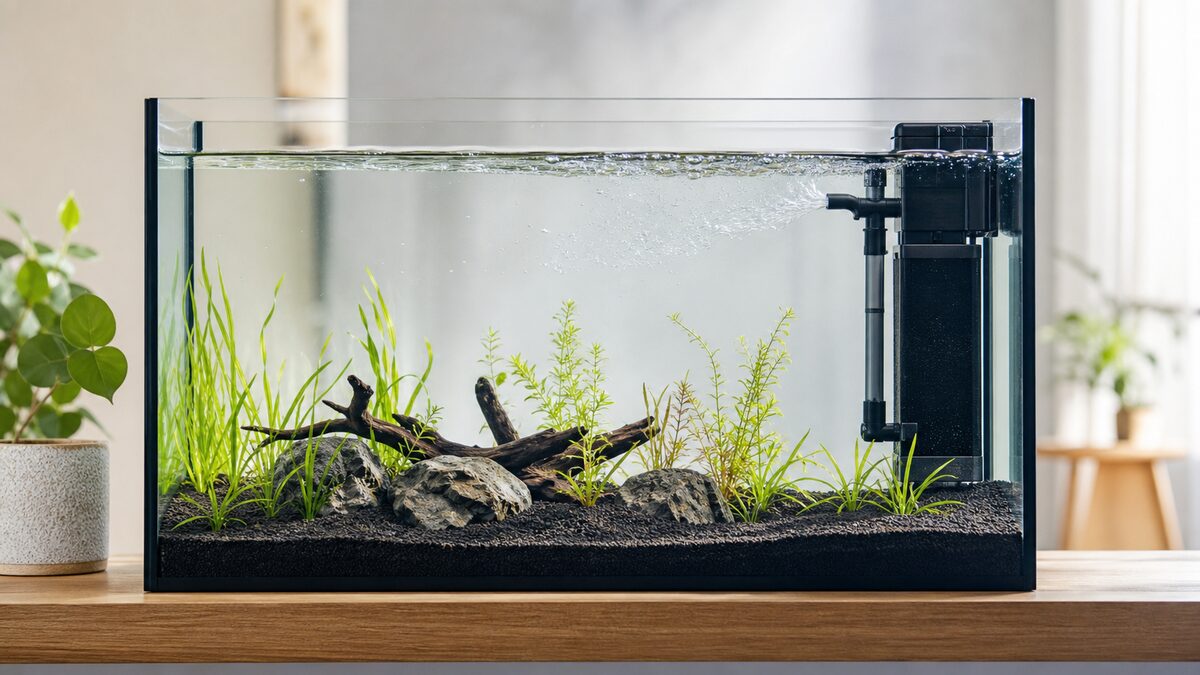
“I’ll run the filter for 24h and add the fish tomorrow, that’s fine, right?” It’s probably the question I see most often from beginners. The short answer: yes, run the filter, but 24h isn’t enough, not by a long way. Here’s why, and how long you actually need.
The short version. The filter must run non-stop, 24/7, from the moment you fill the tank and forever after. But before you add fish, you have to let it run through the whole cycle (3 to 6 weeks), with an ammonia source, while the bacteria establish themselves. 24 hours does not make the water safe.
Where the “24h” idea comes from
The advice to “run it 24h first” mixes up two things that are true but incomplete:
- True: running the filter for a day lets you check it works, clear out air bubbles and let the temperature settle.
- False: that’s not enough to make the water liveable. In 24h, no bacterial colony has had time to form.
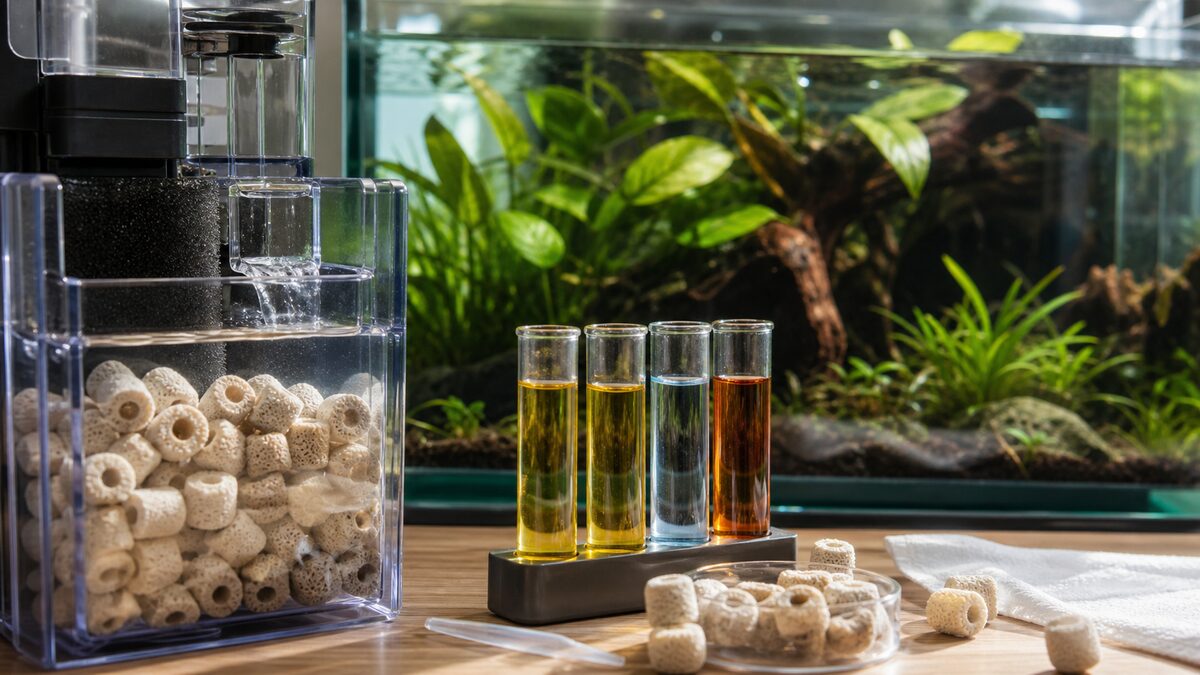
The filter’s real job isn’t just mechanical (trapping debris). It’s mainly biological: it houses the bacteria that turn the fish’s toxic waste into less harmful compounds. And those bacteria take weeks to grow numerous enough.
The filter runs non-stop — never switched off
This one’s non-negotiable: the filter never switches off. Not at night, not while you’re on holiday.
The cleaning bacteria live fixed in the filter media and breathe the oxygen carried by the current. If you switch the filter off:
- after 2 to 4 hours, they start to run short of oxygen;
- when you switch it back on, you risk pushing waste-laden water, or even dead bacteria, back into the tank.
If you do have to unplug the filter for a clean or a move, take the media out and drop it into a bucket of tank water (never chlorinated tap water). You'll save your bacteria.
How long to run the filter before fish
The right answer isn’t “24h” but “the length of the cycle”. In practice:
- Fill the tank, plug in the filter and the heater.
- Add an ammonia source (a pinch of food, or a measured dose of pure ammonia), otherwise the bacteria have nothing to feed on and won’t develop.
- Let it run 3 to 6 weeks, testing the water.
- Add fish only when ammonia = 0 and nitrite = 0.
Before adding anything, check these points:
- The filter has run without interruption since you filled the tank
- The heater is holding 24–26 °C
- An ammonia source has been added to feed the bacteria
- Tests read 0 ammonia and 0 nitrite
- The filter flow suits the volume (≈ 4–5× the volume per hour)
Conclusion
Yes, the filter has to run before the fish, but non-stop throughout the whole cycle, not just for 24h. And once the fish are in, it never stops again. It’s the tank’s vital organ: treat it as such.
For the full waiting time, see « How long to cycle a 54L tank? ». And if you’re unsure which type of filter to get, our comparison « HOB or internal filter for a 60L planted tank? » will help you choose.
Frequently asked questions
Is 24 hours of filtering enough before adding fish?
No. 24h is enough to check the filter works and to settle the temperature, but not to establish the bacteria that make the water safe. You need several weeks of cycling, with the filter running non-stop, before adding any fish.
Should you turn the filter off at night?
Never. The bacteria that clean the water live in the filter and need a constant flow of oxygenated water. Switching the filter off for a few hours can start to suffocate them. The filter runs 24/7, all year round.
What happens if I switch the filter off for several hours?
Beyond 2 to 4 hours without flow, the filter bacteria run short of oxygen and start to die. When you restart it, the water can spike with ammonia. If a cut is unavoidable, take the filter media out and keep it in tank water.
Will the filter cycle on its own without an ammonia source?
No. The bacteria need 'food' (ammonia) to multiply. A filter running in empty water barely cycles at all. You need to add an ammonia source (a pinch of food, pure ammonia) to kick off the process.