Best aquarium heater: the guide to choosing well
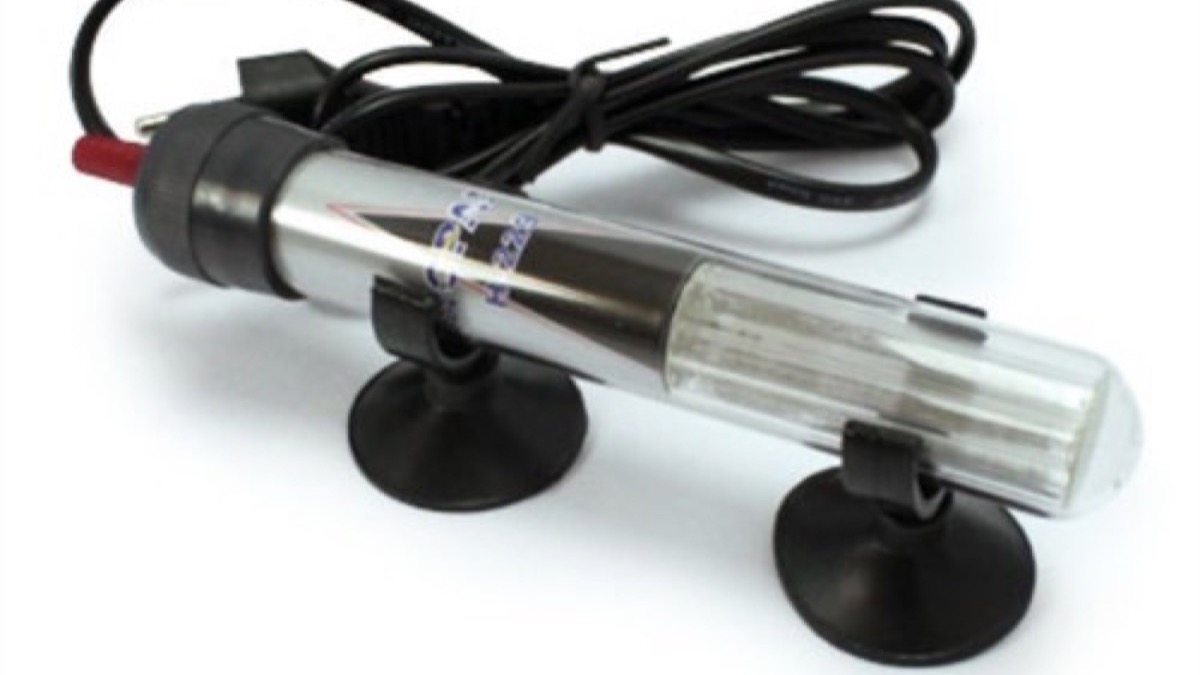
The heater is the vital organ of tropical aquariums: it holds the water at the temperature your fish need, day and night. But not all are equal — and the decisive factor isn’t the brand, it’s the thermostat. Here’s how to choose a reliable heater.
The essentials — how to choose. Aim for 1 to 1.5 watts per litre (≈ 50–75 W for 54L, 100 W for 100L). The number-one factor is the reliability of the thermostat: it’s what holds the temperature and cuts off in time. Insist on safety features (auto shut-off, overheat protection) and always double up with an independent thermometer. A little too powerful beats not powerful enough.
Wattage: the simple rule
The need depends on the volume and the gap with the room temperature. The basic rule: 1 W/litre in a heated room, up to 1.5 W/litre in a cool room.
| Volume | Indicative wattage |
|---|---|
| 54 L | 50–75 W |
| 100 L | 100 W |
| 150 L | 150–200 W |
| 200 L | 200–300 W |
When in doubt, go slightly above: an undersized heater runs non-stop and wears out, while a slightly more powerful, well-regulated model works away calmly.
On large volumes, many aquarists prefer two half-power heaters rather than one big one: if one fails or sticks, the other limits the damage (water cooling too far, or overheating). A simple, effective safeguard.
The real factor: the thermostat
A heater is a heating element + a thermostat that cuts off at the set temperature. The thermostat is what makes the quality:
- accuracy: does it hold the set point well, without big swings?
- long-term reliability: doesn’t it drift after a few months?
- safety: does it cut off if it ends up out of the water? Does it protect against overheating?
A good thermostat = a stable temperature = healthy fish. A bad thermostat is a hazard, whatever the wattage.
On the gear front, here’s what we recommend:
Heater with thermostat and safety features
Our recommendation- Thermostat that holds the set point without big swings
- Safety features: shut-off out of water, overheat protection
- Wattage to choose by volume (≈ 50–75 W for 54L, 100 W for 100L)
Amazon affiliate link. Price and availability may change at any time.
And since a heater’s display can drift, always double up with an independent check:
Independent thermometer
- Checks the real temperature, independently of the heater
- Spots thermostat drift before it becomes a problem
- Cheap, for real peace of mind
Amazon affiliate link. Price and availability may change at any time.
Before you buy, run through these points:
- Wattage: 1 to 1.5 W/L depending on my room
- Accurate, reliable thermostat (the number-one factor)
- Safety features: shut-off out of water, overheat protection
- Independent thermometer to check
- On a large volume: possibly 2 half-power heaters
- Placed near a water flow for even heat
On a heater, I don't look at the design but at the thermostat's reputation for reliability and the presence of safety features. It's the device that, if it fails, can cook or chill a whole tank. You don't cut corners on it.
Conclusion
The “best” heater is above all reliable and safe: an accurate thermostat, a matched wattage (1–1.5 W/L) and protections. Double it up with an independent thermometer, and consider two heaters on large volumes. It’s a purchase where safety trumps everything else.
For the precise calculation on a small tank, see “What wattage heater for a 54L tank?”.
Frequently asked questions
What wattage heater should I choose for my aquarium?
The basic rule is 1 to 1.5 watts per litre. So around 50–75 W for 54L, 100 W for 100L, more if the room is cool. A slightly higher wattage driven by a good thermostat beats an undersized heater that runs non-stop.
What makes a good aquarium heater?
A reliable, accurate thermostat, a wattage matched to the volume, good safety (auto shut-off out of water, overheat protection) and sturdy construction. The thermostat is the heart of the unit: it's what keeps the temperature stable.
Do I need a heater with a digital display?
It's a convenience, not a must. A display makes setting and monitoring easier, but a good dial heater does the job. Either way, you double up with an independent thermometer, because the heater's display can drift.
Is an aquarium heater dangerous?
A quality heater with protection is safe. The risks (overheating, breakage) mostly come from cheap models with no safety features, or a heater switched on out of water. Choose a model with auto shut-off and only plug it in once submerged.