Tiny white bugs on the glass: what are they?
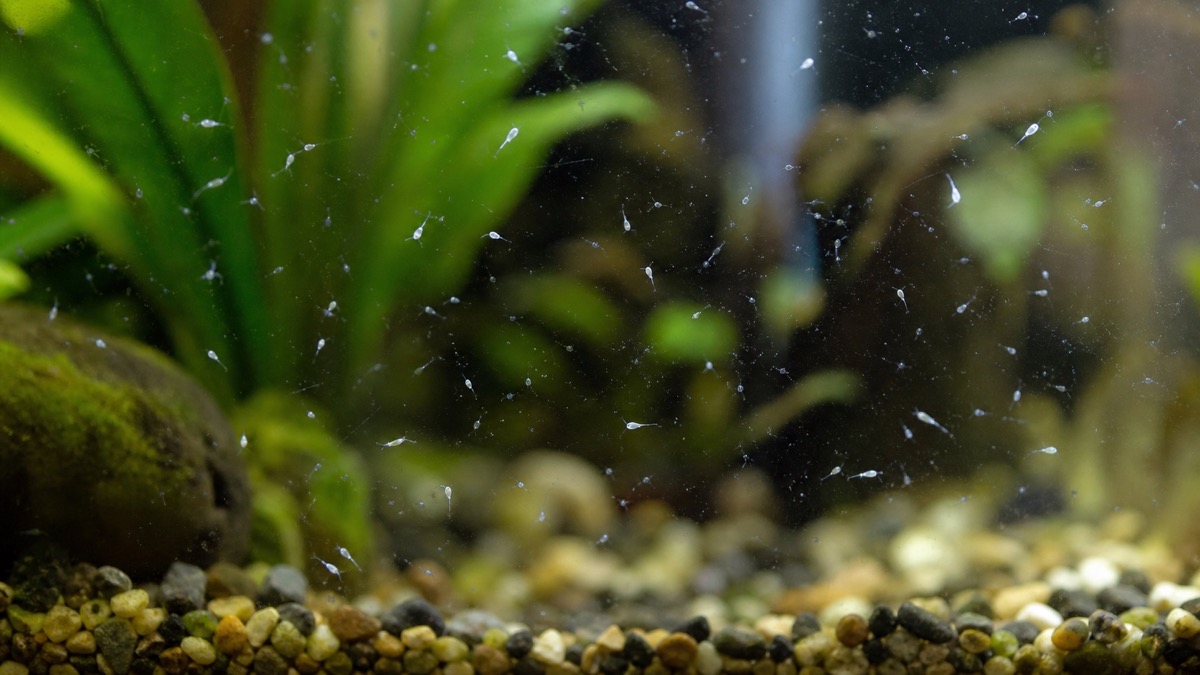
You press your nose to the glass and suddenly you spot dozens of tiny white dots moving about. A perfectly understandable beginner panic: “my tank is infested!” In the overwhelming majority of cases it’s harmless — and it’s actually a good sign. Let’s learn to identify them.
The essentials. The tiny white bugs on the glass are nearly always copepods, ostracods or other detritus-feeding micro-organisms: harmless, a sign of a living tank. A sudden bloom = you’re feeding too much. The main fix: cut back on food and siphon the substrate. Only certain planaria call for targeted action.
What are these little bugs?
| Look / movement | Probably | Danger |
|---|---|---|
| White dots hopping through the water and on the glass | Copepods | None (live food!) |
| Tiny “seeds” that move quickly | Ostracods | None |
| Flatworms gliding slowly, arrow-shaped head | Planaria | Low, except in shrimp tanks |
| Tiny thin worms that wiggle | Detritivores / free-living nematodes | None in small numbers |
Most of these organisms arrive with plants or food, and develop as soon as there’s something to eat. Their presence proves your water is healthy — they wouldn’t survive in toxic water.
Before trying to "eradicate" anything, watch them for 30 seconds. Do they hop about (copepods, harmless) or glide slowly and flat (planaria)? That one observation decides whether you need to act or simply be glad you have a living tank.
Why they multiply
A sudden explosion of these bugs almost always has a single cause: excess food. Leftovers falling to the bottom, too many pellets, a new tank rich in organic matter. They don’t create the problem, they reveal it.
That’s good news: fix the cause, and their population collapses on its own.
What to do
- I've watched the movement to identify them (hopping = harmless copepods)
- I'm cutting back on food: just what's eaten in 1-2 minutes
- I siphon the substrate during water changes to remove leftovers
- I do NOT use a chemical treatment (especially with shrimp/snails)
- For invasive planaria: a homemade trap or a suitable fish
The planaria case: these are the only ones that can cause trouble, particularly in a shrimp tank (they go after eggs and juveniles). Cutting back on food is still the foundation; a planaria trap (homemade or shop-bought) or certain fish will keep them in check. Be wary of chemical “anti-planaria” products: many are lethal to shrimp and snails.
Conclusion
Tiny white bugs on the glass are rarely bad news: they’re a sign of a living ecosystem, and a reminder that you’re probably feeding a little too much. Cut back on food, siphon the substrate, and let balance settle in. Save the targeted action for planaria in shrimp tanks.
To avoid overfeeding, see also our articles in the Species silo (how many fish, how much to feed). And if the water is cloudy too, read “Cloudy aquarium water: full guide”.
Frequently asked questions
Are the tiny white bugs on the glass dangerous for my fish?
In the vast majority of cases, no. The copepods, ostracods and detritivores that show up on the glass are harmless and even a good sign: they point to an active microfauna. Only a few organisms (some planaria around shrimp eggs) cause problems.
How do I recognise planaria?
Planaria are flatworms that glide slowly across the glass, often with a triangular or arrow-shaped head. Copepods, by contrast, move in small jerky hops through the water. Shape and movement tell them apart.
Why do these bugs suddenly appear?
They multiply when there's excess food: leftovers on the bottom, overfeeding. A sudden bloom is a signal that you're feeding too much. Cutting back on food makes their numbers drop naturally.
How do I get rid of them safely?
First cut back on food (the cause). Siphon the substrate during water changes. For invasive planaria, fish like some gouramis or a homemade trap help. Avoid harsh chemical treatments, especially with shrimp present.