How to cool your tank in summer
The heatwave hits, and the tank temperature climbs dangerously. It’s a real summer risk: water that’s too hot runs short of oxygen and exhausts the fish. Good news, you can bring it down with a few simple moves — as long as you avoid the false good ideas.
The essentials. Above 28–30 °C, the water loses its oxygen and the fish suffer. To cool it down safely: a fan blowing across the surface (evaporation → −2 to −4 °C), lid open, lighting cut, and partial water changes with slightly cooler water. To avoid: tap-water ice cubes and any sudden temperature shock.
Why heat is dangerous
Two problems stack up when the water heats:
- Oxygen drops: the warmer the water, the less oxygen it can dissolve. The fish rise to the surface, breathing fast.
- Metabolism races: the fish use more oxygen… just when there’s the least of it.
It’s this double effect that makes heat spikes dangerous, especially in small volumes (which heat up fast).
The right moves (safe and effective)
1. A fan over the surface
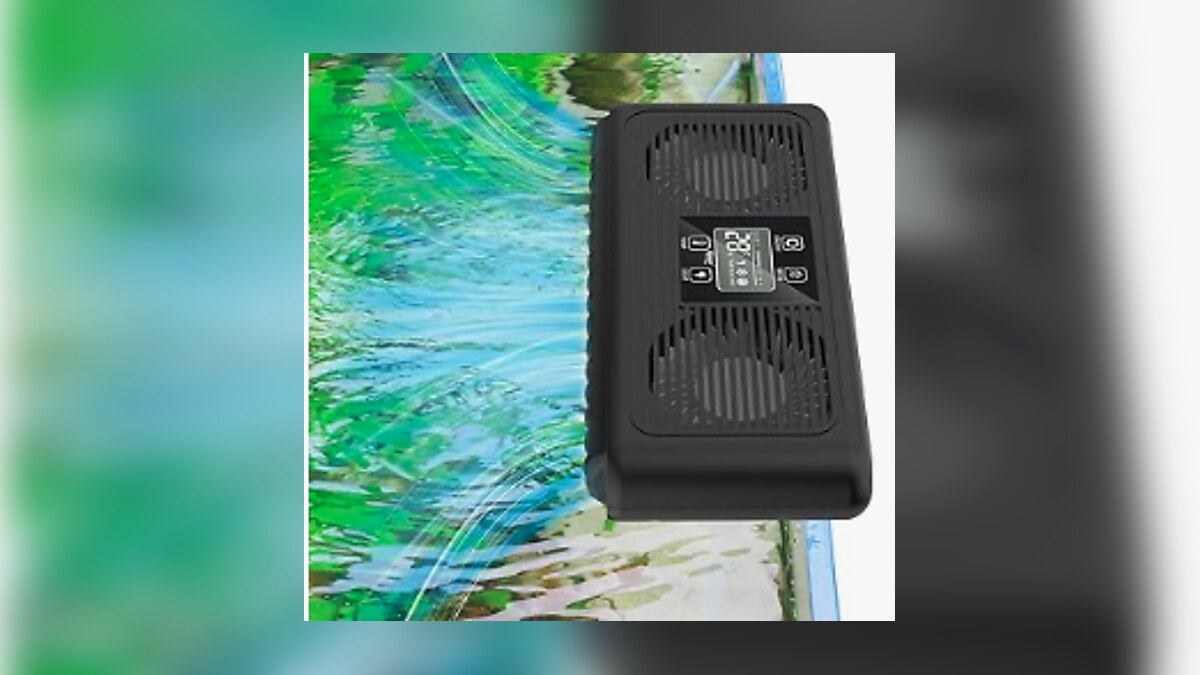
This is the go-to method. A fan blowing across the water surface speeds up evaporation, and evaporation cools (like sweating). Typical gain: 2 to 4 °C. Open the lid to let the air circulate. It’s the best-value buy against the heat:
Aquarium cooling fan
Our pick- Lowers the water by 2 to 4 °C through evaporation
- Far cheaper and less power-hungry than a chiller
- Clips onto the rim of the tank, tilts towards the surface
Amazon affiliate link. Price and availability may change at any time.
2. Boost oxygenation
Since oxygen is short, add some: an air pump with an airstone, or angle the filter outlet to agitate the surface. It doesn’t cool the water but it relieves the fish straight away:
Air pump + airstone
Our pick- Makes up for the lack of oxygen in warm water
- Relieves the fish straight away during spikes
- Useful all year round, not just in summer
Amazon affiliate link. Price and availability may change at any time.
3. Reduce heat sources
- Switch off or cut the lighting during the hot hours (a light unit gives off heat).
- Move the tank out of direct sun, close the blinds in the room.
4. A partial water change, gently
A 20–30% water change with slightly cooler water helps — without overdoing it: never more than 1–2 °C difference at once, to avoid temperature shock.
The golden rule of summer: cool down slowly. A fish copes far better with water at 29 °C than with a sudden 5 °C drop in ten minutes. Gentleness always beats speed.
Mistakes to avoid
- ❌ Tap-water ice cubes straight into the tank: chlorine + localised temperature shock.
- ❌ A big cold water change all at once: temperature shock for the whole tank.
- ❌ Unplugging the filter “so it doesn’t add heat”: you starve the fish of oxygen and kill the bacteria.
Before the next heatwave, keep these moves in mind:
- Fan blowing across the surface, lid open
- Boosted oxygenation (air pump / agitated surface)
- Lighting cut during the hot hours, tank in the shade
- Partial water change, 1-2 °C difference max
- I do NOT use tap-water ice cubes or sudden cold water
- I keep the filter running
Conclusion
To get through summer, rely on the surface fan, oxygenation and cutting heat sources, always cooling gently. Temperature shocks and tap-water ice cubes do more harm than good. With these habits, your fish ride out the heatwave without trouble.
If the water also goes cloudy during the heat, see “Cloudy aquarium water: full guide”.
Frequently asked questions
At what temperature does aquarium water become dangerous?
Above 28-30 °C, the water holds less and less oxygen and most freshwater fish suffer. At around 30 °C and up, the risk becomes serious. The goal in summer is to stay under 28 °C as much as possible.
How do I cool an aquarium quickly?
The most effective and safe way: a fan blowing across the water surface (evaporative cooling can win you 2-3 °C), opening the lid, cutting the lighting, and doing a partial water change with slightly cooler water. Avoid sudden temperature shocks.
Can I put ice cubes in the aquarium?
Not directly: tap-water ice cubes contain chlorine and cause a localised temperature shock. If needed, use a sealed frozen water bottle floated on the surface, watching it so you don't drop the temperature too fast.
Is a fan enough to cool an aquarium?
Often yes for moderate heat spells: a surface fan can lower the water by 2 to 4 °C through evaporation. For severe heatwaves or demanding tanks, a chiller is the answer, but an expensive one.
Should I switch off the heater in summer?
If the room is already above the tank's target temperature, the heater won't switch on anyway. No need to unplug it, but check it's set to the right temperature and hasn't stuck on.