How much LED light to grow Anubias?
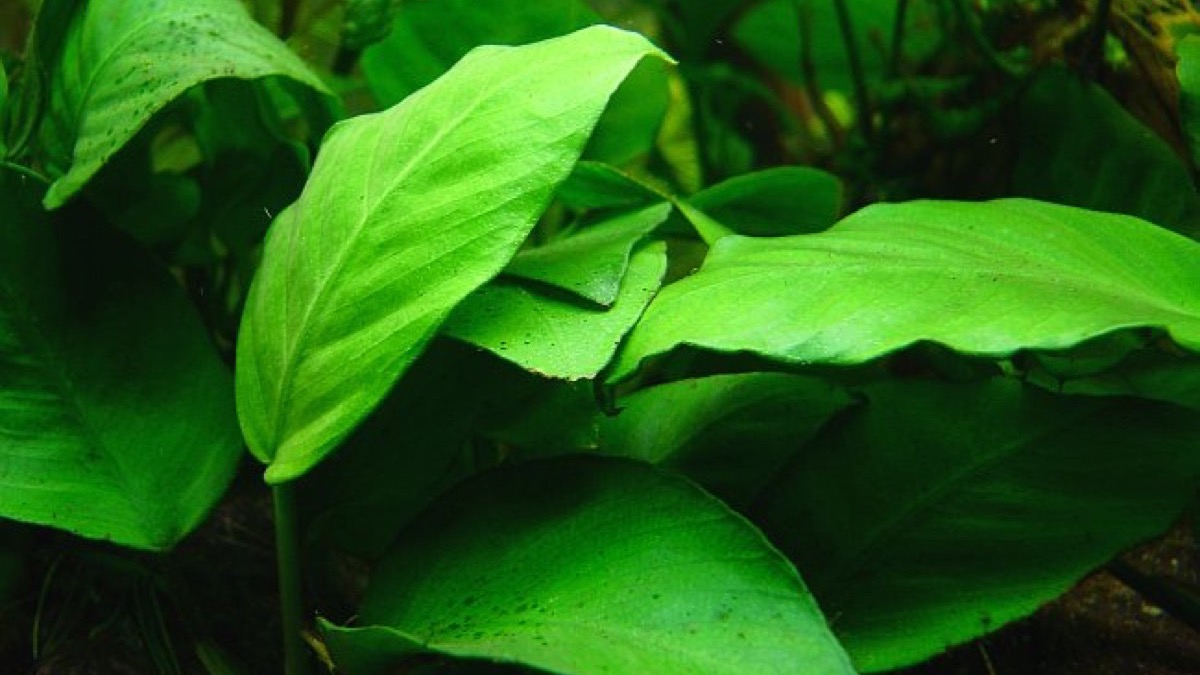
Good news if you love Anubias: it’s one of the least demanding plants when it comes to light. The classic trap isn’t too little light, but too much — which coats its leaves in algae. Here’s the right dose of LED for healthy Anubias.
The essentials — our pick. Anubias is a low- to medium-light plant. Moderate LED lighting (≈ 0.3 to 0.5 W/litre), on for 6 to 8 hours a day, is perfect. More light won’t make it grow faster (its growth is naturally slow) and mostly feeds algae on its leaves. With Anubias, it’s better to under-light than over-light.
Anubias, a shade plant
In the wild, Anubias often grows under cover, in the shade of riverbanks. It’s a tough, slow plant that gets by on very little light. Practical consequences:
- it doesn’t need powerful lighting or CO2;
- too much light doesn’t help — it mostly speeds up algae on its leaves, which stay in place for a long time (slow growth).
It’s the exact opposite of a hungry foreground plant: here, less is more.
If your Anubias get covered in algae, don't go hunting for a miracle fertiliser: first cut the light (duration and intensity) and place them in partial shade, under a piece of wood or a taller plant. Nine times out of ten, that's where the problem is.
The right dose of LED
| Benchmark | For Anubias |
|---|---|
| Intensity | Low to medium (~0.3–0.5 W/L) |
| Duration | 6 to 8 h/day |
| CO2 | Not needed |
| Placement | Partial shade, under a decoration or a tall plant |
On a standard tank, a basic LED light for easy plants is more than enough. No need to invest in high-intensity “pro planted” lighting: it would be counterproductive for Anubias.
For Anubias, here’s what we recommend:
LED light for easy plants
Our recommendation- Moderate intensity (~0.3 to 0.5 W/L), ideal for Anubias
- Avoids the excess light that coats leaves in algae
- No need to invest in a high-intensity light
Amazon affiliate link. Price and availability may change at any time.
And a timer to set the duration at 6–8 h without thinking about it:
Plug-in timer
- Sets the duration to 6–8 h/day automatically
- Limits algae on the Anubias' slow-growing leaves
- Simple and cheap
Amazon affiliate link. Price and availability may change at any time.
Before setting up, keep these benchmarks in mind:
- Moderate lighting (~0.3 to 0.5 W/L), no high-intensity light
- Duration set to 6 to 8 h/day (timer)
- Anubias placed in partial shade, under wood or a tall plant
- Rhizome NOT buried (on rock/wood)
- No CO2 needed
- If algae on the leaves: I cut the light first
For Anubias, my best advice fits in one sentence: when in doubt, give less light. It's the ideal plant for a dimly lit tank, and it'll repay you with clean, algae-free leaves.
Conclusion
To grow Anubias, you don’t need heavy gear: moderate LED lighting, 6 to 8 hours a day, and a spot in partial shade. The real risk is too much light, which invites algae without speeding up growth. With Anubias, keeping the light restrained is the key to a great result.
For other no-CO2 plants, see “Easy plants with no CO2 for beginners”. And if algae move in, “How to get rid of green hair algae”.
Frequently asked questions
How much LED light do Anubias need?
Not much: Anubias is a low- to medium-light plant. Moderate LED lighting, around 0.3 to 0.5 W per litre, is plenty. Too much light won't make it grow any faster and mostly feeds algae on its slow-growing leaves.
Do Anubias need a lot of light?
No. They're shade plants that naturally grow under cover. They tolerate low light and hate excess. Too much light, especially without CO2, coats their leaves in algae.
How many hours of light for Anubias?
6 to 8 hours a day is enough. Beyond that, you won't speed up its (already slow) growth but you will feed algae. A timer keeps the duration constant without you having to think about it.
Why do my Anubias have algae on the leaves?
Almost always because of too much light relative to the plant's very slow growth. Its old leaves stay exposed for a long time and get covered in algae. Cut the duration and intensity, and place the Anubias in partial shade.