What filter flow for a shrimp tank?
Dwarf shrimp (Neocaridina, Caridina) are vulnerable on one specific point: the current. Too strong, and they struggle, hide, and the babies end up sucked into the filter. So the right question isn’t “which powerful filter”, but “which gentle and safe filter”. Here are the benchmarks.
The essentials — our pick. For a shrimp tank, prioritise a gentle current: a flow rate of around 3 to 5× the volume per hour, but above all spread out without force. The air-driven sponge filter is the firm favourite: very gentle flow, no risk of sucking in babies, and it hosts the biofilm that shrimp graze on. Failing that, baffle your filter and protect the intake with a pre-filter sponge.
Why current is the enemy of shrimp
Dwarf shrimp come from calm waters. Too strong a current has two consequences:
- they wear themselves out moving around, hide, and come out less;
- the juveniles (tiny) get sucked into an unprotected filter.
So the goal isn’t power, but enough flow to oxygenate and filter, while staying gentle where the shrimp live.
The reflex "the more powerful the filter, the cleaner the water" is wrong for shrimp. A nano shrimp tank produces very little waste. A gentle but well-colonised filter does far better than a big one that turns the tank into a washing machine.
The sponge filter: king of the shrimp tank
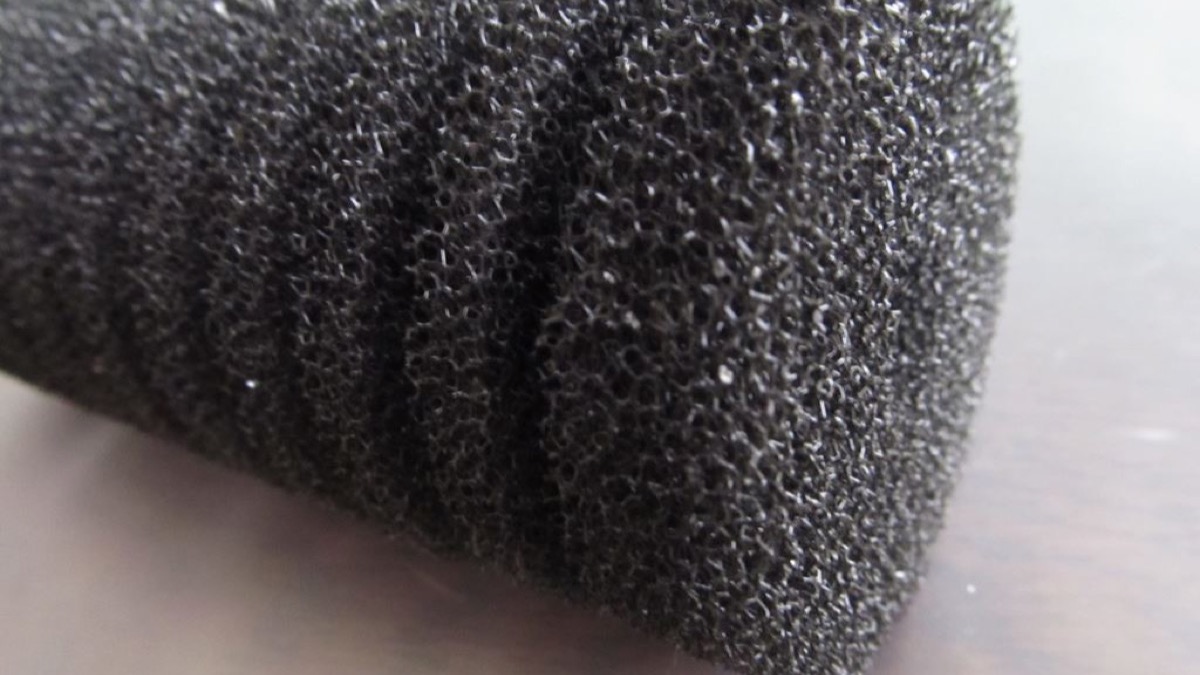
The sponge filter (air-driven) works with an air pump: air rises up a column and pulls water through a porous sponge.
- ✅ Very gentle current, perfect for shrimp.
- ✅ Won’t suck in babies (the sponge acts as a barrier).
- ✅ Its porous surface gets covered in biofilm → a natural pantry for shrimp.
- ✅ Cheap and simple.
- ❌ Needs an air pump (a little noise is possible).
- ❌ Less attractive than a hidden filter.
For a shrimp tank, this is the filter we recommend first:
Sponge filter for shrimp
Our recommendation- Very gentle current, completely safe for shrimp
- Won't suck in babies: the sponge acts as a barrier
- Its porous surface hosts biofilm, a natural pantry
- Cheap and simple to set up
Amazon affiliate link. Price and availability may change at any time.
A sponge filter runs on an air pump — pick a quiet one for your own comfort:
Quiet air pump
- Essential for running the sponge filter
- Quiet models for a living space
- Often adjustable output to fine-tune the current
Amazon affiliate link. Price and availability may change at any time.
And if you’re keeping a conventional filter, a pre-filter sponge makes the intake safe:
Pre-filter sponge on the intake
- Stops juveniles being sucked in
- Gets covered in biofilm, just like the sponge filter
- Fits most intake strainers
Amazon affiliate link. Price and availability may change at any time.
What if I keep my current filter?
You don’t necessarily have to buy a new one. You can adapt an internal or HOB filter:
- I protect the intake with a pre-filter sponge
- I baffle / aim the outlet to break the current (towards a glass pane or a decoration)
- I aim for gentle flow, not agitated water
- Ideally, I add or switch to a sponge filter for the biofilm
- I let the tank mature properly before introducing shrimp
For a shrimp tank, the sponge filter + small air pump combo is unbeatable: safe, cheap, and the biofilm that builds up on the sponge becomes a permanent buffet for the shrimp. It's the first purchase I recommend.
Conclusion
For shrimp, forget the race for power: what you need is a gentle current and a safe intake. The sponge filter ticks every box — safe, nourishing, economical. If you keep a conventional filter, protect the intake and baffle the current. Your shrimp (and their babies) will thank you.
To choose a filter for a community tank, see “HOB or internal filter for a 60L planted tank?”. And to start a colony, “How many Neocaridina to start a colony in 30L?”.
Frequently asked questions
What filter flow rate do I need for a shrimp tank?
A moderate flow is plenty: around 3 to 5 times the volume per hour, but above all spread out gently. What matters isn't so much the number as the absence of strong current and the fact that baby shrimp can't be sucked in. A sponge filter or a baffled filter is ideal.
Why use a sponge filter for shrimp?
An air-driven sponge filter creates a very gentle current and won't suck in shrimp or babies. Its porous surface hosts the biofilm that shrimp graze on. It's the safest and most popular filter for a shrimp tank.
Can a shrimp get sucked into the filter?
Yes, especially juveniles with an unprotected high-suction filter. Always protect the intake with a pre-filter sponge (or use a sponge filter). It's essential as soon as you have breeding.
Do I need a powerful filter for a shrimp tank?
No. Shrimp produce very little waste and a nano shrimp tank doesn't need powerful filtration. A gentle but well-colonised filter with a pre-filter beats a big filter with a violent current every time.